
US President Donald Trump is expected to sign the Lindsey O. Graham Sanctioning Russia and Iran Act of 2026 later on Friday (local time). A White House official confirmed the development to ANI without revealing further details.

India, the world's third largest oil consuming and importing nation, bought crude oil worth 49 billion euros from Russia in the third year of Moscow's invasion of Ukraine, a global think tank said. India, which has traditionally sourced its oil from the Middle East, began importing a large volume of oil from Russia soon after the invasion of Ukraine in February 2022.
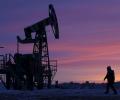
India's annual oil import bill could rise by $9-11 billion if the country is compelled to move away from Russian crude in response to US threats of additional tariffs or penalties on Indian exports, analysts said. India, the world's third-largest oil consumer and importer, has reaped significant benefits by swiftly substituting market-priced oil with discounted Russian crude following Western sanctions on Moscow after its invasion of Ukraine in February 2022.

Sanctioning Russian oil would have led to a sharp surge in oil prices to above $80 per barrel levels, which would impact pump prices in the US ahead of midterm elections next year.
The wide-ranging sanctions imposed by the US on the Russian oil sector have started to dent near-term oil flows to India with state-owned Bharat Petroleum Corporation Ltd (BPCL) saying not enough cargoes are available for March.

US Secretary of State Marco Rubio kick-started a three-day visit to India on Tuesday to advance bilateral ties in energy, trade and investment, defence, critical technologies, and exchange views on the West Asia crisis.
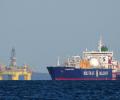
India, the world's third largest oil consuming and importing nation, spent 112.5 billion euro (about Rs 1.5 lakh crore) on buying crude oil from Russia since the start of the Ukraine war, a European think tank said on Thursday. The Centre for Research on Energy and Clean Air (CREA) released a report on payments to Russia for fossil fuels since February 24, 2022. "According to our estimates, since the beginning of the war, Russia earned EUR 835 billion in revenue from fossil fuel exports," it said.

'If you listen to a rowdy in a class, he will keep on bullying you.' 'India can say do whatever you want. We will not compromise on anything.'

US President Donald Trump claims India has significantly reduced and nearly stopped purchasing oil from Russia, citing de-escalation efforts. This follows previous tensions over tariffs and India's energy sourcing.

The United States has announced it will not renew sanctions exemptions for the purchase of Russian and Iranian oil, ending a 30-day waiver that allowed some countries, including India, to continue importing Russian oil despite sanctions related to the Ukraine war.
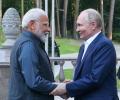
The Indian government is dealing with the matter having in mind the national interests of this country in the first place, he said.

India has rejected White House Trade advisor Peter Navarro's comments on New Delhi for its procurement of Russian crude oil, calling them 'inaccurate and misleading'. The relations between New Delhi and Washington are on a downturn after President Donald Trump doubled tariffs on Indian goods.

Indian OMCs have not been buying Iranian or Venezuelan crude which is actually sanctioned by US. OMCs have always complied with the price cap of $60 for Russian oil recommended by the US.

If international crude oil prices zoom past the current level of about $90 per barrel and move towards $100 and beyond, middle-class consumers are not going to keep quiet about their discomfort, points out Arun Balakrishnan, former chairman and managing director, Hindustan Petroleum.

A US-sanctioned tanker carrying Iranian crude oil is heading to India, marking the resumption of oil imports from Iran after seven years.

India said it is broad-basing and diversifying sourcing of petroleum product to meet market conditions.

'It is a blunt and dangerous attempt to pressure India to sign BTA on one-sided terms.'

China announced a "ground-breaking" trilateral meeting between the presidents of China, the US, and Russia, scheduled for November 19 in Shenzhen during the APEC summit. This first-ever face-to-face meeting aims to discuss safeguarding world peace, strategic stability, and global challenges like nuclear arms reduction and artificial intelligence. Beijing has shown reluctance on trilateral nuclear arms control due to its smaller arsenal, while the war in Ukraine will not be a discussion point. The APEC summit will also see Japanese Prime Minister Sanae Takaichi's participation, drawing attention due to recent Sino-Japanese tensions over Taiwan.
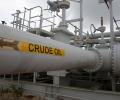
India has gained the least since Russia invaded Ukraine in February 2022 and was penalised the most, while the US, China and the European Union emerged as the biggest beneficiaries from the war.

'Elevated crude prices and unchanged domestic fuel prices would put pressure on the profitability and cash flows of OMCs.'
What is more surprising is that a surge in Russian oil supplies has come after the G7 imposed stringent sanctions on Moscow.
Savings for Indian refiners from purchasing Russian oil have decreased to a third of what they were in the years following Russia's invasion of Ukraine, which triggered global crises, sanctions, and discounted Russian oil seeking buyers. Despite this, savings from importing cheap Russian oil were significant enough to help Indian refiners tide over frozen petrol and diesel pump prices.

Amidst global energy market volatility driven by the West Asia crisis, Russia has proposed increasing its crude oil and natural gas supplies to India, strengthening bilateral energy ties and aiming for USD 100 billion in annual trade by 2030.

Come December, India may have to re-evaluate purchases of Russian oil if a price cap on crude oil proposed by the US and the European Union (EU) comes into effect. That impacts nearly a quarter of India's oil purchases that come at a discount, helping limit marketing losses for India's state refiners and enabling New Delhi to manage inflation by freezing pump prices of motor fuels. In September, India imported 1 million barrels a day or 24 per cent of its overall imports from Russia, which became the biggest supplier of oil to India.
Analysts predict India will face oil price volatility and macroeconomic effects due to the escalating Iran crisis, though the country's oil supply chain is not yet structurally insecure.
India's trade account could come under pressure and there could be an inflation push if crude oil prices remain above the $90 per barrel (Brent) for a prolonged period since India imports over 85 per cent of its oil and roughly 50 per cent of its gas. A rebound in economic activity is bound to lead to higher fuel demand. While India is the third-largest importer of crude, it is a net exporter of refined products, which helps to compensate to some degree.

US Secretary of State Marco Rubio on Tuesday said the United States would prefer to end its extension of waivers on Russian oil "as soon as possible", while noting that such decisions ultimately rest with the US Treasury Department.

The US House of Representatives has advanced a bill that would empower President Donald Trump to impose 100 per cent tariffs on countries, including India, that purchase oil and gas from Russia, and also extend sanctions on Iran. The legislation, which previously passed the Senate, aims to curb Russia's energy revenue amidst the Ukraine conflict.

After a three-month slowdown, India's oil imports (already landed) from Russia bounced back in the first 15 days of October to 1.8 million barrels per day.

New Delhi 'will have to take a call which supply source suits us the best,' the finance minister said, pointing out that crude oil accounts for the bulk of India's foreign exchange spend.

India's import of cheap Russian oil scaled another record in May and is now more than the combined oil bought from Saudi Arabia, Iraq, UAE and the US, industry data showed. India took 1.96 million barrels a day from Russia in May, 15 per cent more than the previous high in April, according to data from energy cargo tracker Vortexa. Russia now makes up for nearly 42 per cent of all crude oil India imported in May.
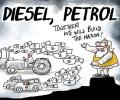
The government on Friday slapped an export tax on petrol, diesel and jet fuel (ATF) while also joining nations like the UK in imposing a windfall tax on crude oil produced locally. A Rs 6 per litre tax on export of petrol and ATF and Rs 13 per litre tax on export of diesel is effective from July 1, finance ministry notifications showed. Additionally, a Rs 23,250 per tonne tax was levied on crude oil produced domestically.

The US has seized an oil tanker, 'Skywave', linked to Iran in the Indian Ocean, as part of efforts to disrupt Iran's oil shipments and enforce sanctions. The vessel was part of a network transporting sanctioned Iranian crude oil, with the seizure occurring amid heightened tensions between Washington and Tehran.

External Affairs Minister S Jaishankar discussed the West Asia conflict and its impact on energy supplies with his Russian counterpart Sergey Lavrov and EU's Foreign Policy chief Kaja Kallas.

Indian refiners have access to only limited Iranian volumes compared with Russian oil, and even the barrels on offer come with 'too many hassles'.

US lawmakers are racing to amend the Russia sanctions bill before recess. One amendment specifically names India, China, and other countries as potential targets for 100% tariffs due to their oil trade with Russia. Another significant amendment proposes to scrap the tariff section entirely, while others address presidential waiver powers and aid to Ukraine.
India possesses approximately 100 million barrels of commercial crude oil stocks, capable of covering 40-45 days of its requirements if flows through the Strait of Hormuz are disrupted, according to Kpler.

National Security Advisor Ajit Doval has travelled to Russia to hold crucial talks on bilateral energy and defence ties and to prepare ground for Russian President Vladimir Putin's visit to India later this year.
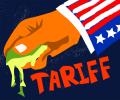
A bipartisan group of US senators has introduced a comprehensive bill imposing extensive sanctions on Russia, with India identified as one of five countries that could incur tariffs for its continued purchase of Russian oil.

A senior Russian diplomat has called the US pressure on India for its procurement of Russian crude oil "unjustified," expressing confidence in continued energy cooperation between India and Russia despite external pressures.
